Homes · Top 10
The 10 Most Beautiful Houses Ever Built
March 14, 2026 · 14 min read · by WowTop10 Editorial
Forget turrets, gargoyles and gilded ballrooms. The most beautiful houses ever built were made by architects who dared to reimagine what a home could be — who believed that a sheet of glass, a line of concrete or a shaft of light could be more luxurious than any palace. The homes on this list float above oceans, dissolve into rainforests, mirror themselves in the blue lakes of Italy and India, and even straddle a waterfall. Some are a century old, some brand new; all of them changed the way the world imagines living. These are ten of the most beautiful houses ever built — clean, luminous, and quietly astonishing.
Stahl House (Case Study House #22)
Los Angeles, California, USA
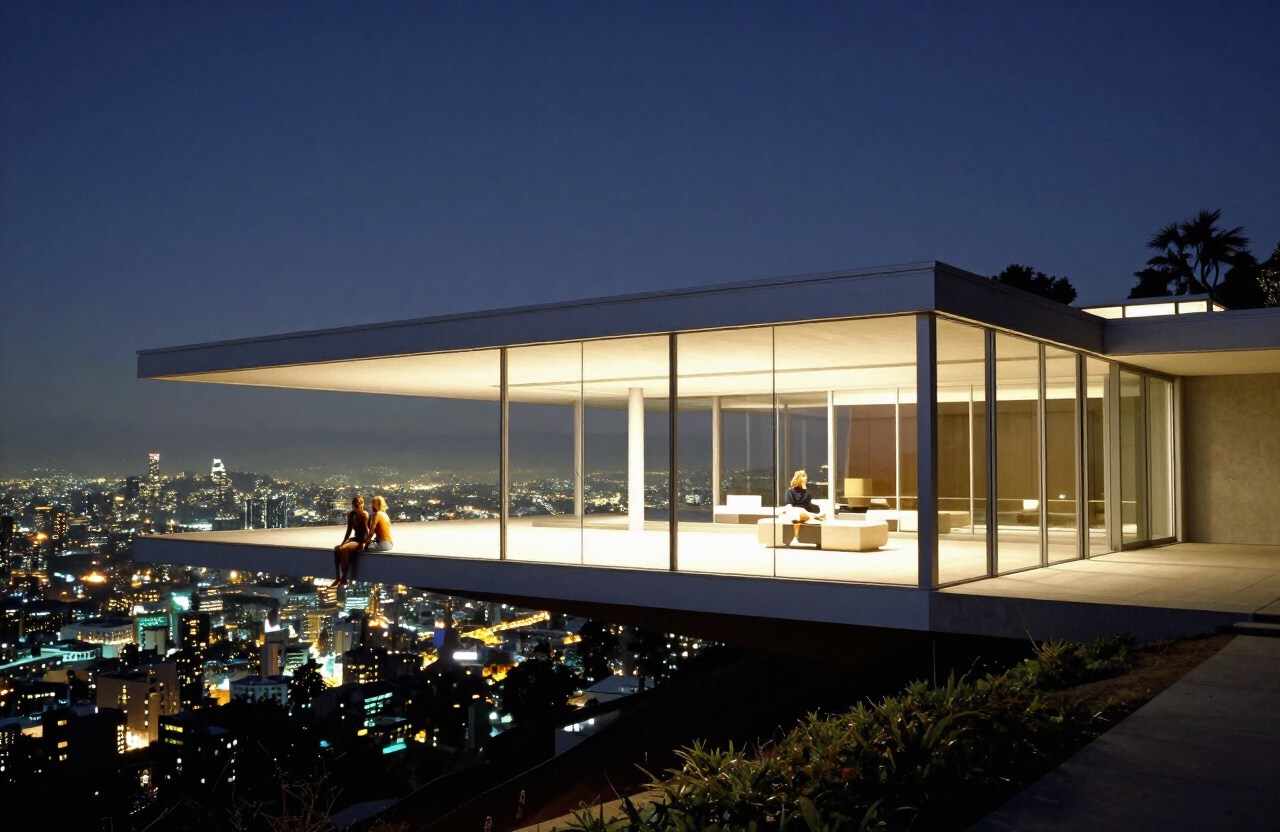
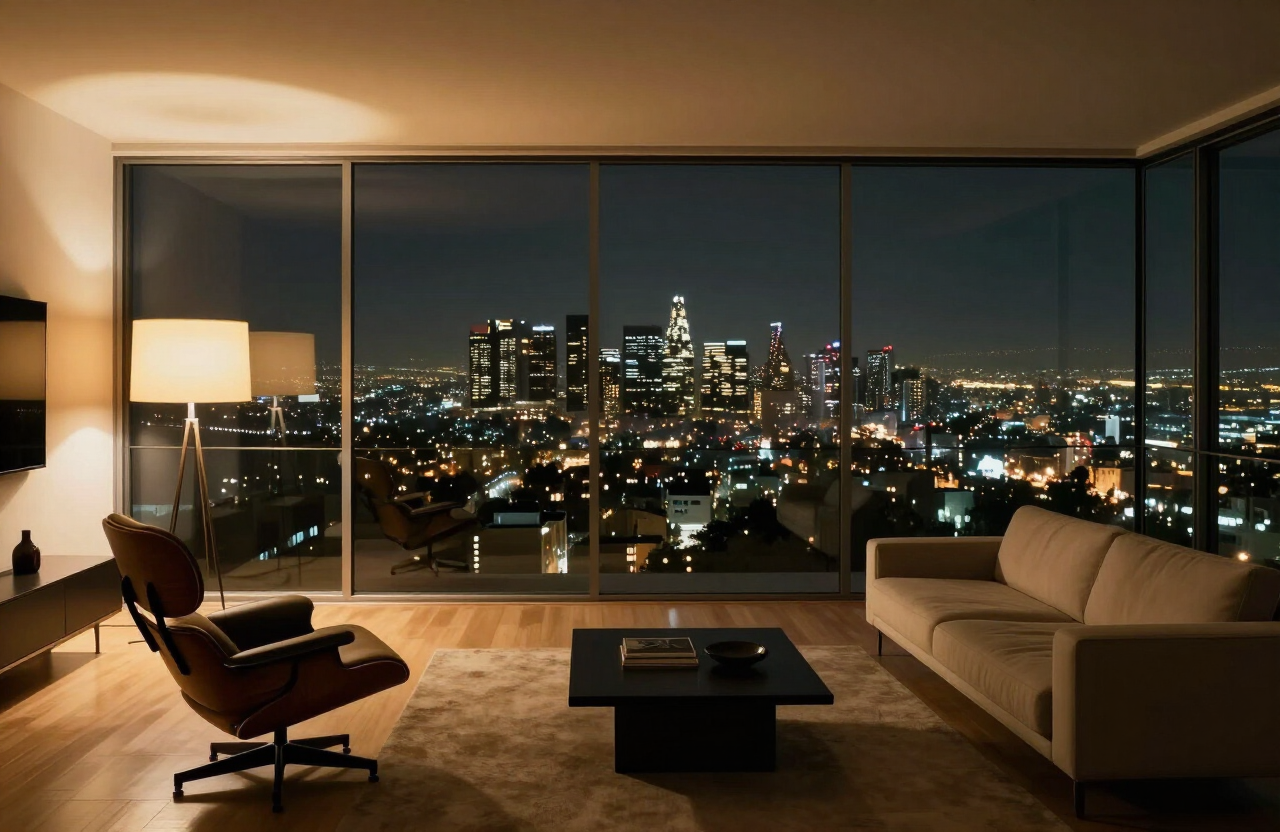
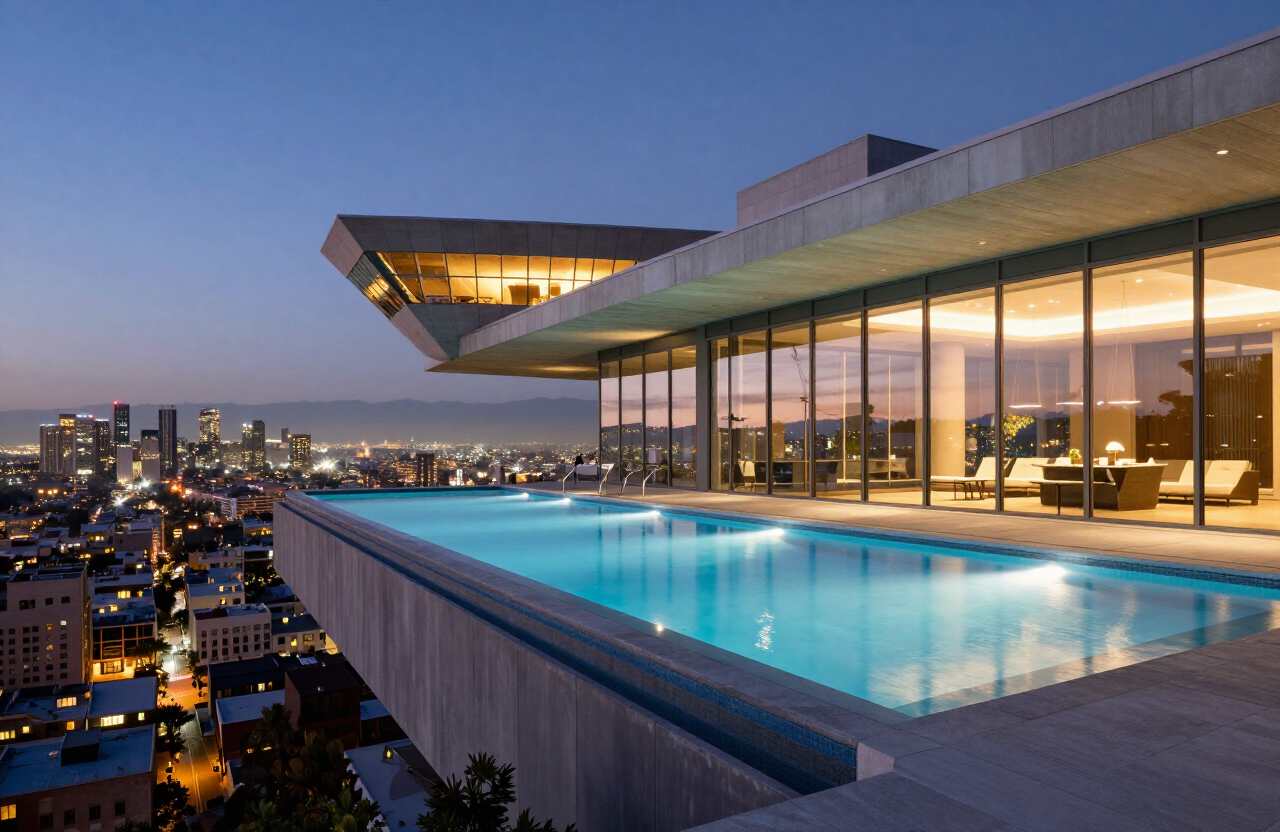
Pierre Koenig’s 1960 masterpiece is the image of modern luxury the whole world secretly pictures: two rectangular glass rooms perched on a Hollywood hillside, their walls dissolving so completely that the living room appears to float above the glittering carpet of Los Angeles below. There is almost no house here — only frame, glass, and view. That was the entire point of the Case Study program: to prove that a home could be reduced to its essence and still feel like the most desirable place on Earth.
Julius Shulman’s legendary 1960 photograph — two women in white cocktail dresses chatting on the cantilevered terrace as the city blazes beneath their feet — turned the Stahl House into the most famous architectural image of the 20th century. But the building earns its fame in person too. By day the glass walls frame the sky; by night they become a lantern, and the city becomes your wallpaper. It is the house that taught the world that modernism could be glamorous, not austere — and it has never been surpassed at it.
- Architect
- Pierre Koenig
- Completed
- 1960
- Style
- Mid-century modern
- Famous for
- Shulman’s night photograph
- Estimated value
- ~$15M
Casa de Vidro
Malibu, California, USA
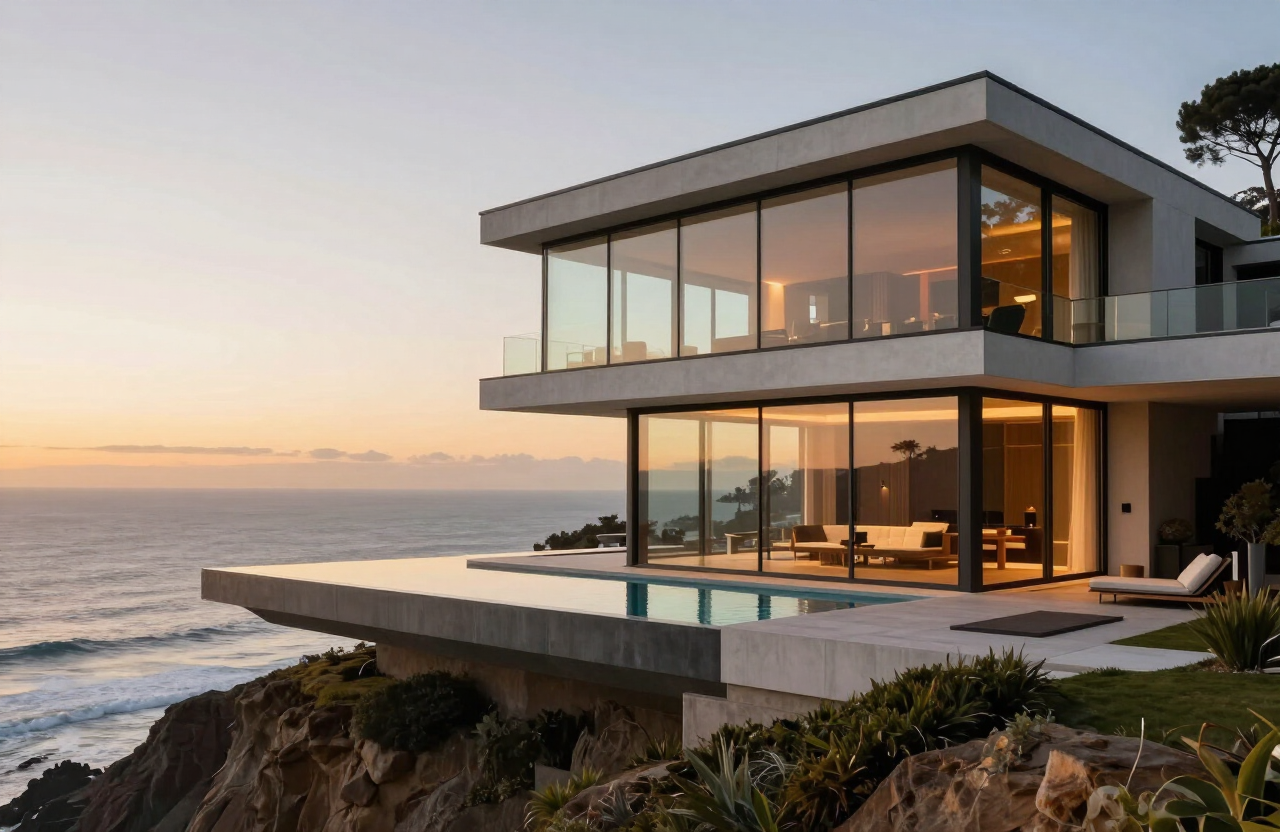
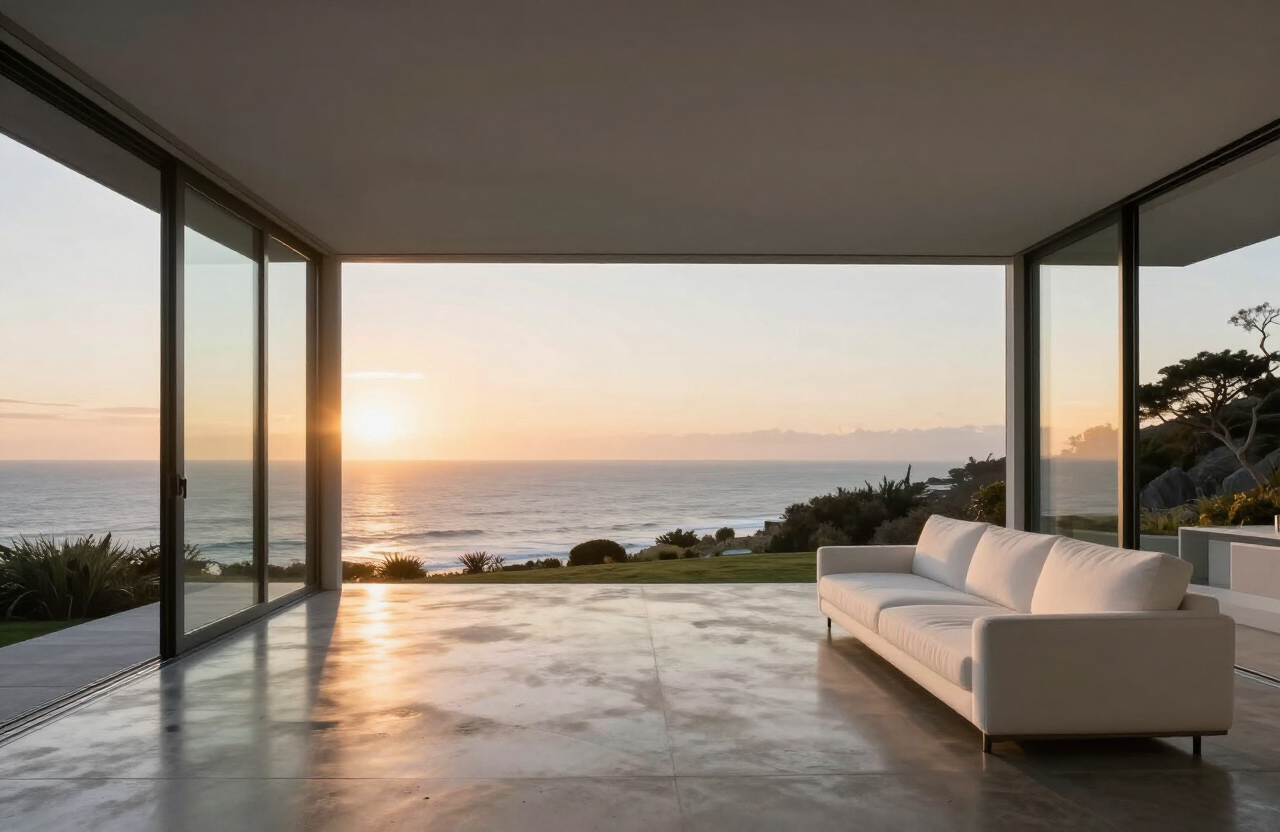
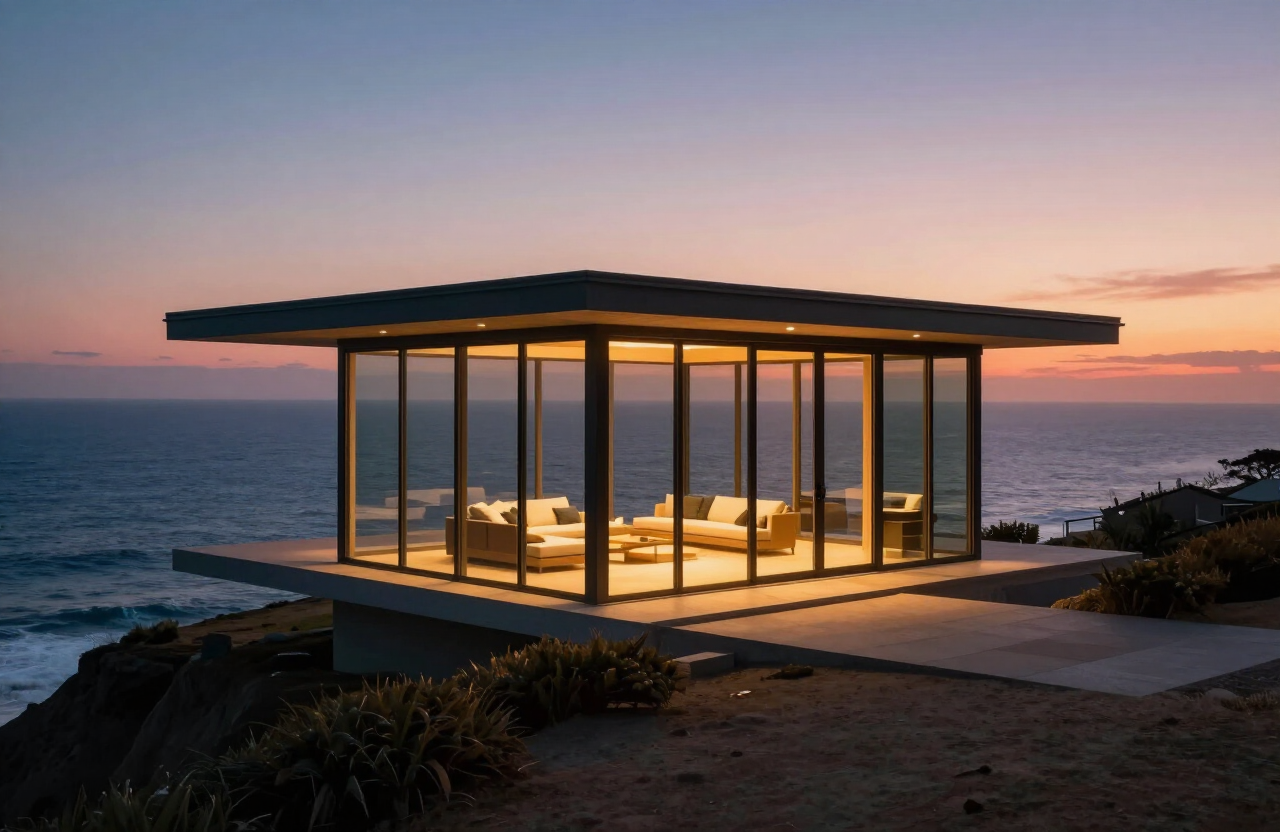
Where the Hollywood Hills end and the Pacific begins, the Casa de Vidro — the Glass House — erases the line between inside and out. Three walls of the living pavilion are floor-to-ceiling glass, so the ocean, the horizon and the setting sun become the room’s only decoration. By day the glass mirrors the sky; at dusk it turns transparent and the warm interior glows like a lantern suspended above the beach.
The architecture is a single disciplined gesture: a thin steel frame, a flat roof, and nothing else. There are no curtains, no partitions, no ornament — only the view, which changes by the hour and the season. To live here is to live inside the landscape, wrapped in light and the sound of the surf. It is Californian modernism at its most serene: a house that disappears so that the ocean can appear.
- Style
- Glass modernism
- Setting
- Cliffside over the Pacific
- Walls
- Floor-to-ceiling glass
- Best at
- Sunset
- Estimated value
- ~$35M
Kaufmann Desert House
Palm Springs, California, USA
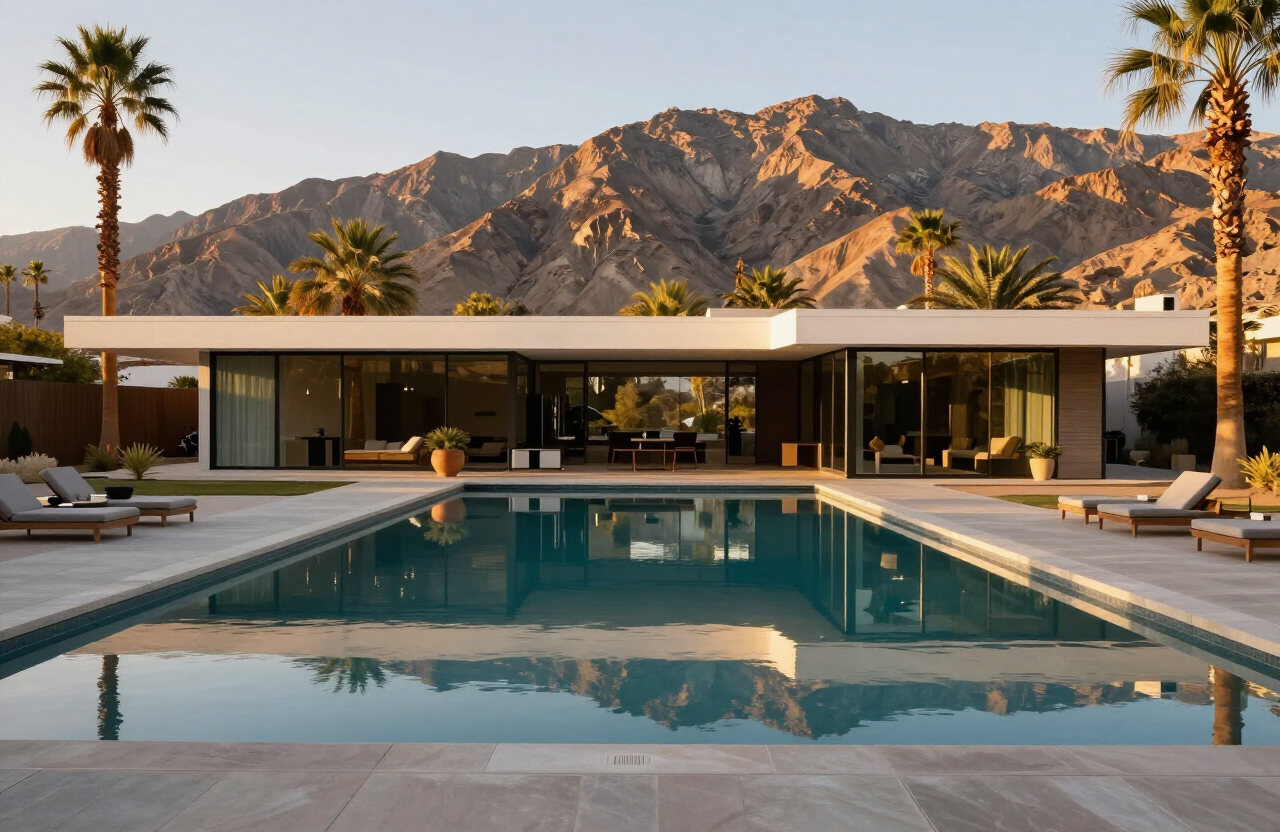
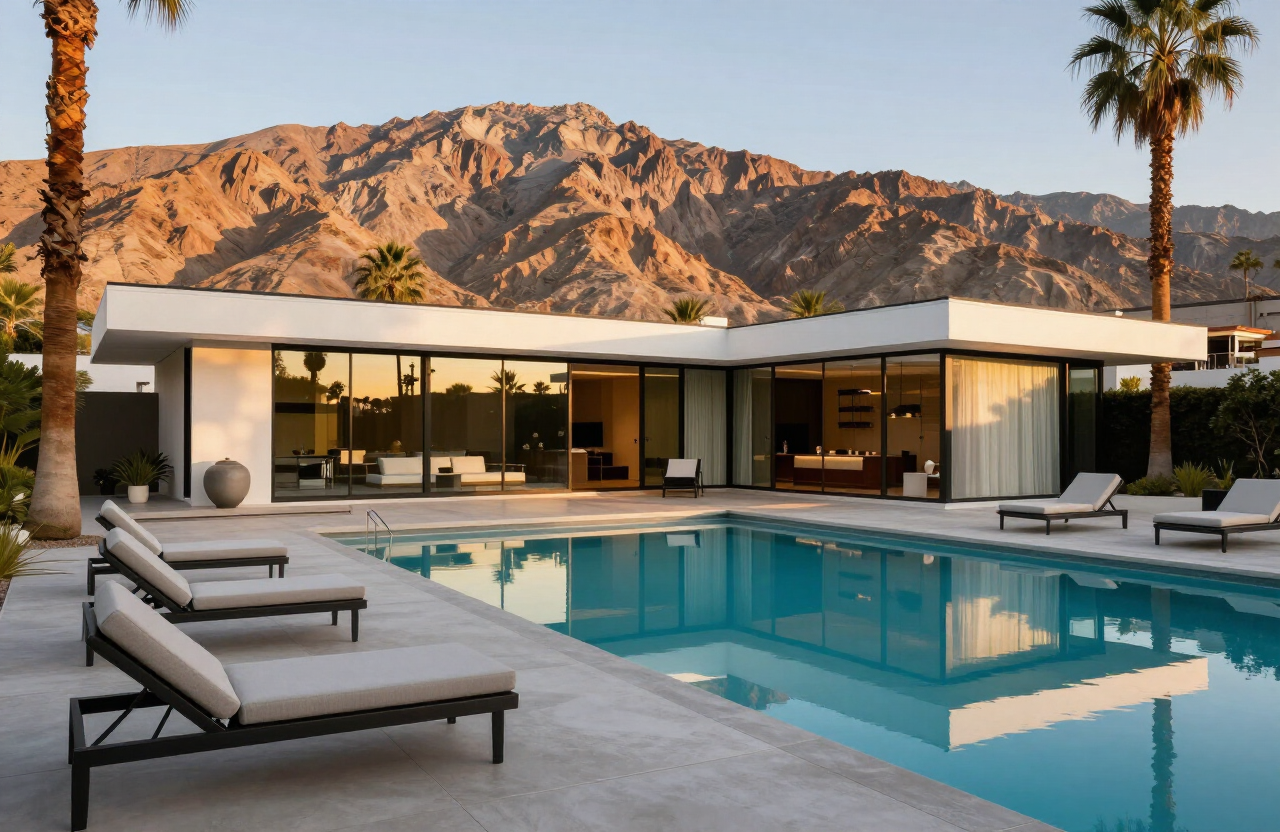
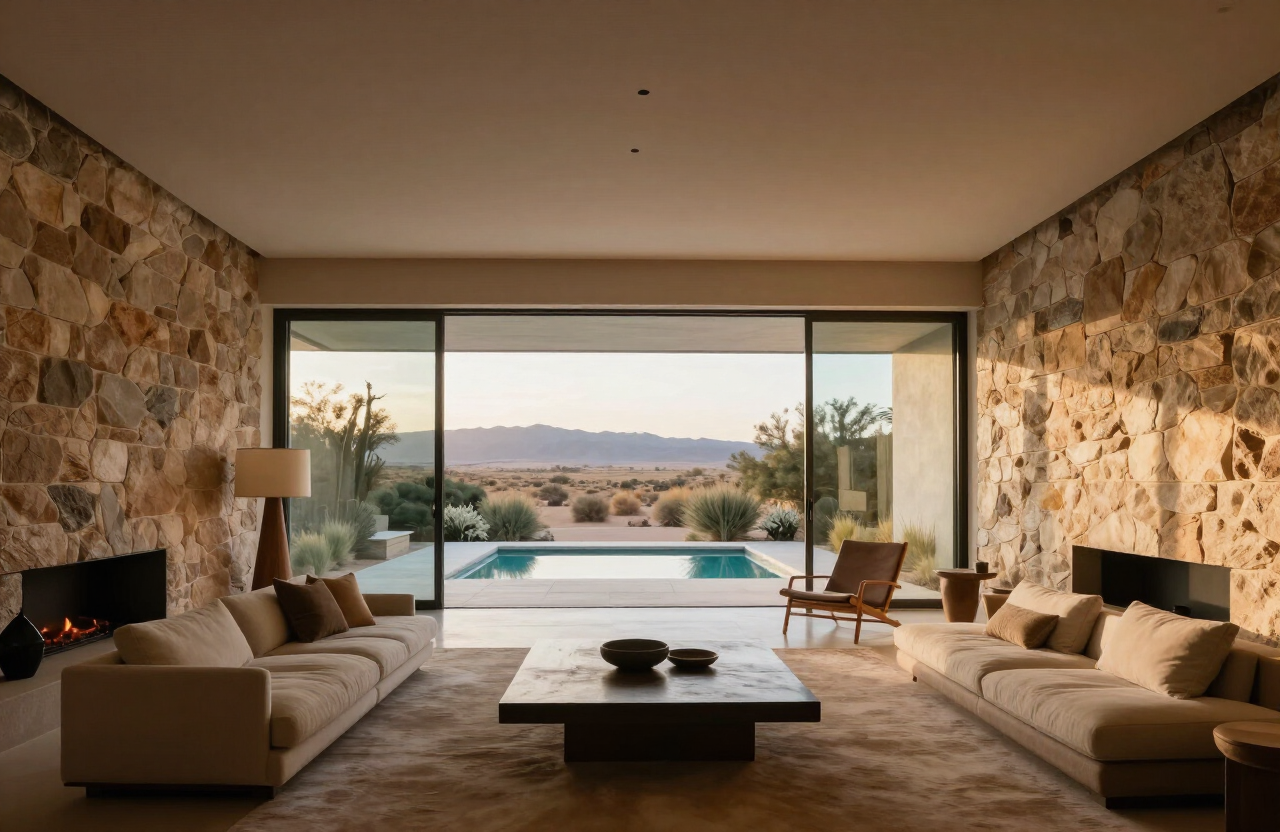
Where Mies floated above the landscape, Richard Neutra wove his 1946 Palm Springs house into it. A long, low composition of white walls, slender steel and vast panes of glass stretches horizontally across the desert floor, its rooflines echoing the ridges of the San Jacinto mountains behind. A rectangular swimming pool runs out from the house like a mirror laid on the sand, doubling the sky at golden hour. This is desert modernism at its most seductive — cool, shaded, and infinitely photogenic.
Built for the same Edgar Kaufmann who commissioned Fallingwater, the Desert House was designed as a winter escape from the Pittsburgh cold, and it perfected a new kind of American luxury: the indoor-outdoor house where the garden, the pool and the living room are one continuous space. Nearly every sleek Palm Springs villa since owes it a debt. Surrounded by palms and silence, with the desert light pouring through walls of glass, it remains the most glamorous modern house ever built in America.
- Architect
- Richard Neutra
- Completed
- 1946
- Style
- Desert modernism
- Commissioned by
- Edgar J. Kaufmann
- Estimated value
- ~$20M
Clifton 2A
Cape Town, South Africa
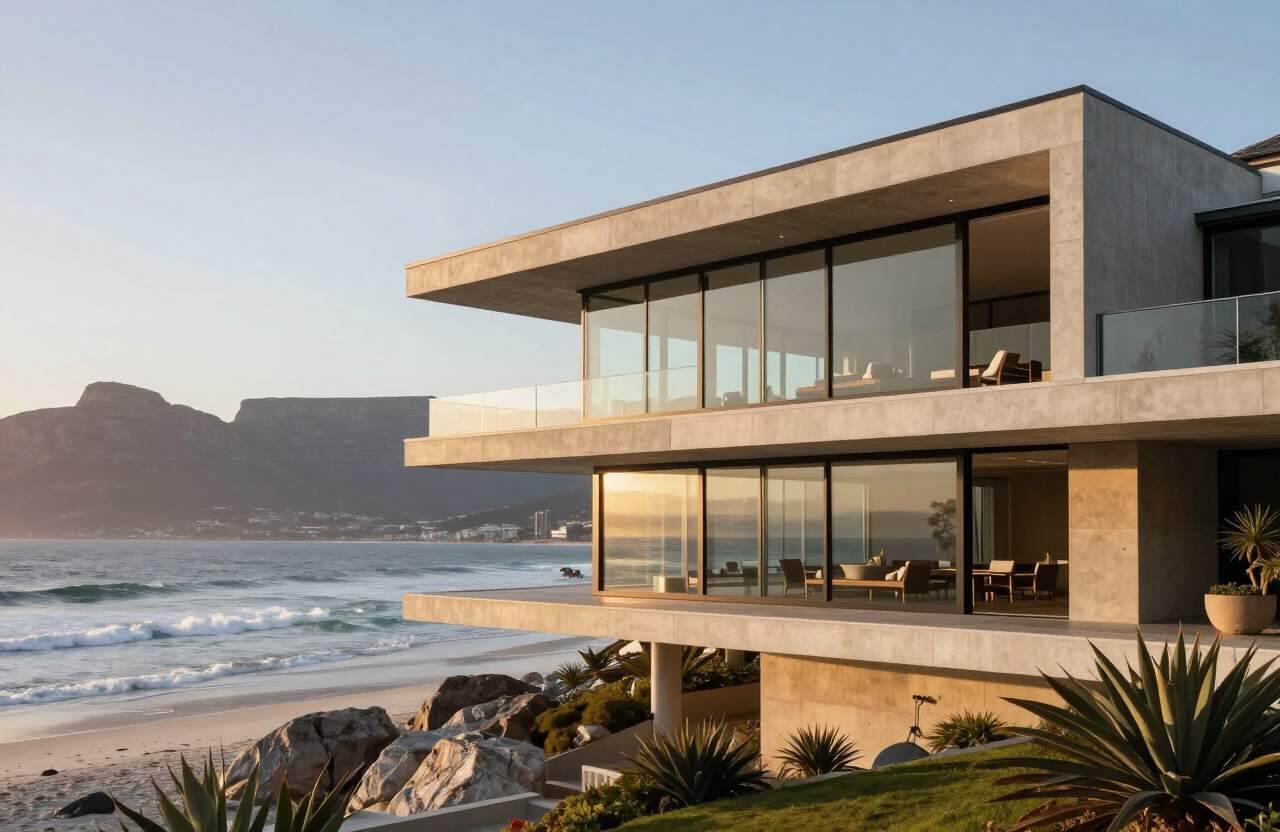
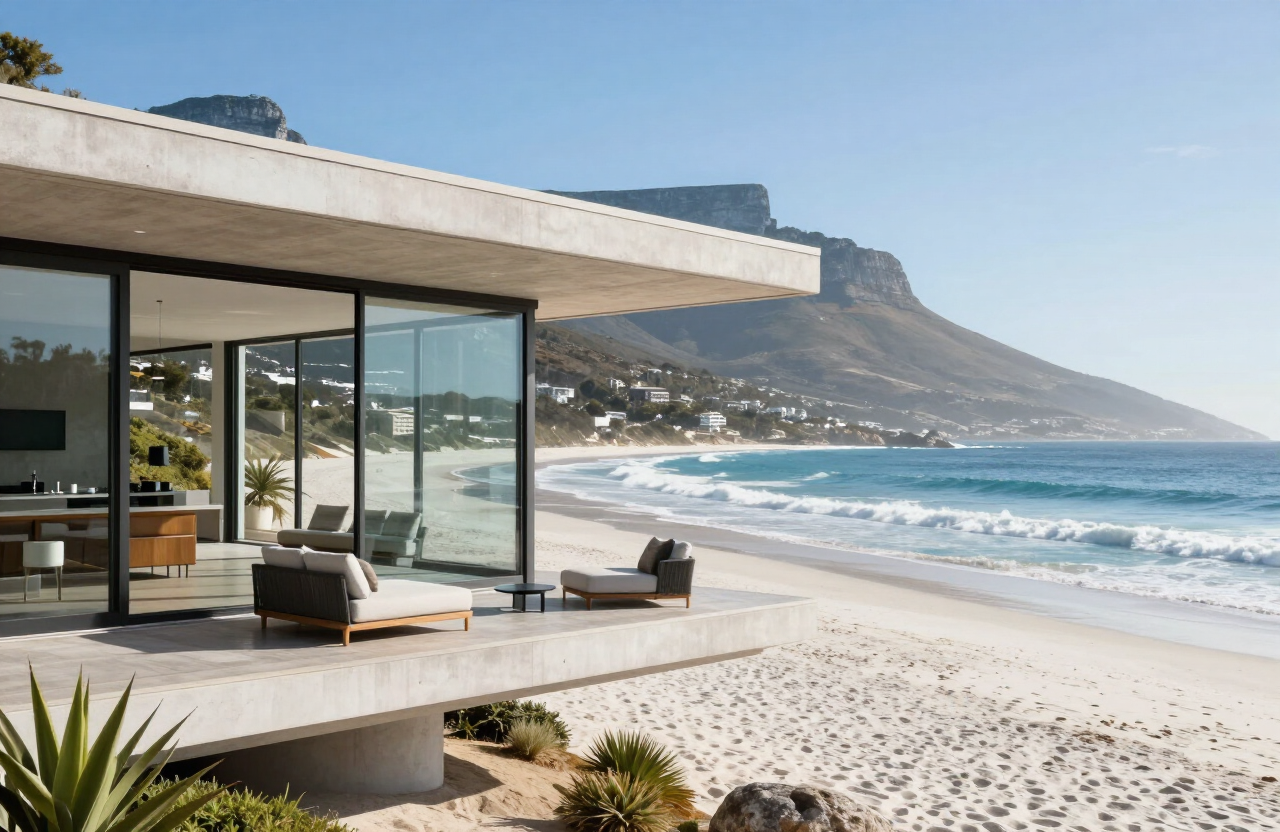
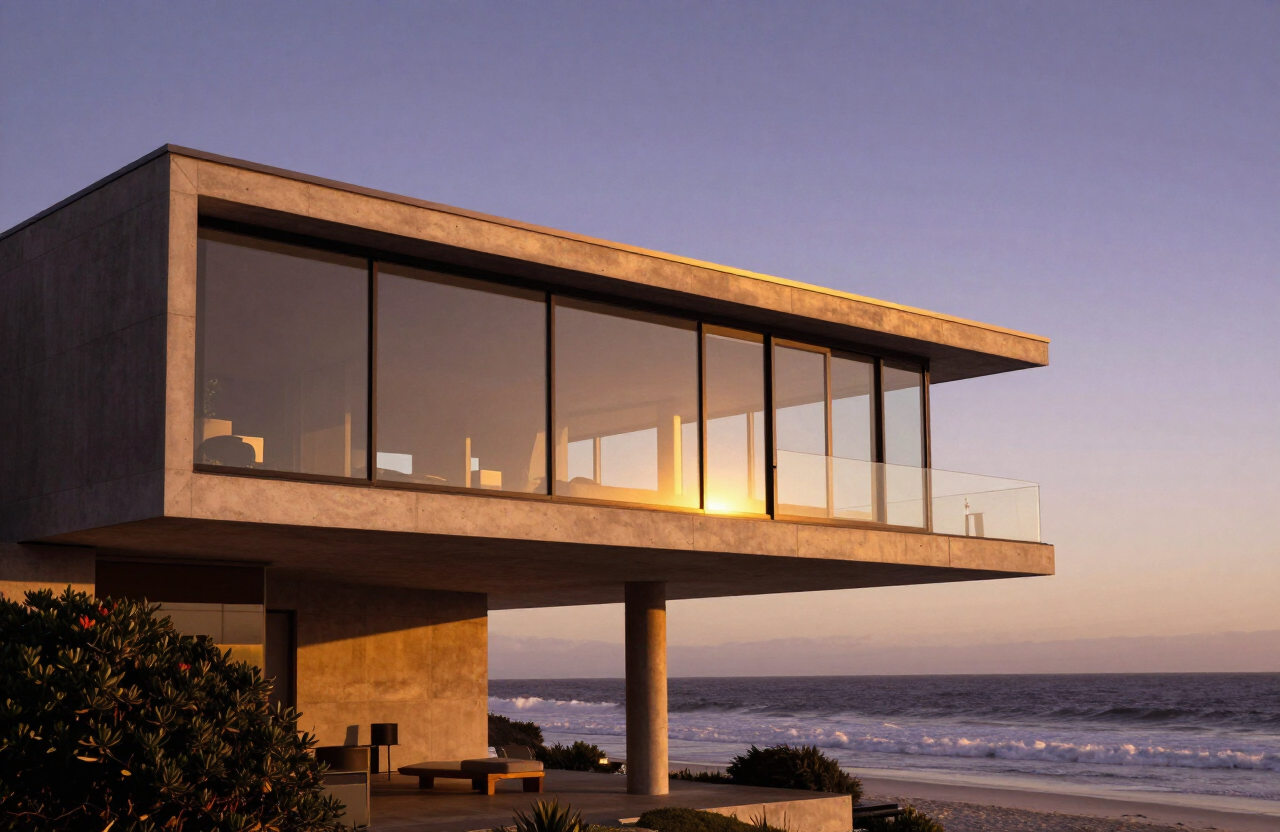
Cape Town’s Clifton Beach is a crescent of fine white sand wedged between granite boulders and the cold blue Atlantic, and Clifton 2A is the house that claims the best of it — a low, cantilevered pavilion of glass and concrete that hovers above the sand as though it might float out to sea. From the terrace the view runs uninterrupted to Lion’s Head and Table Mountain; below, the four beaches of Clifton fold into one another with the tide.
The design is built around the light. Walls slide away so the living room opens fully to the ocean breeze; deep overhangs shade the glass from the summer sun while framing the horizon like a photograph. At sunset the western facade turns gold, then amber, then violet, and the house seems to glow in sympathy. It is South African coastal modernism at its most assured — a house that belongs to its beach as completely as the sand does.
- Location
- Clifton Beach
- Style
- Coastal modernism
- View
- Atlantic & Table Mountain
- Feature
- Cantilevered terrace
- Estimated value
- ~$8M
Casa de Verão, Paraty
Paraty, Rio de Janeiro, Brazil
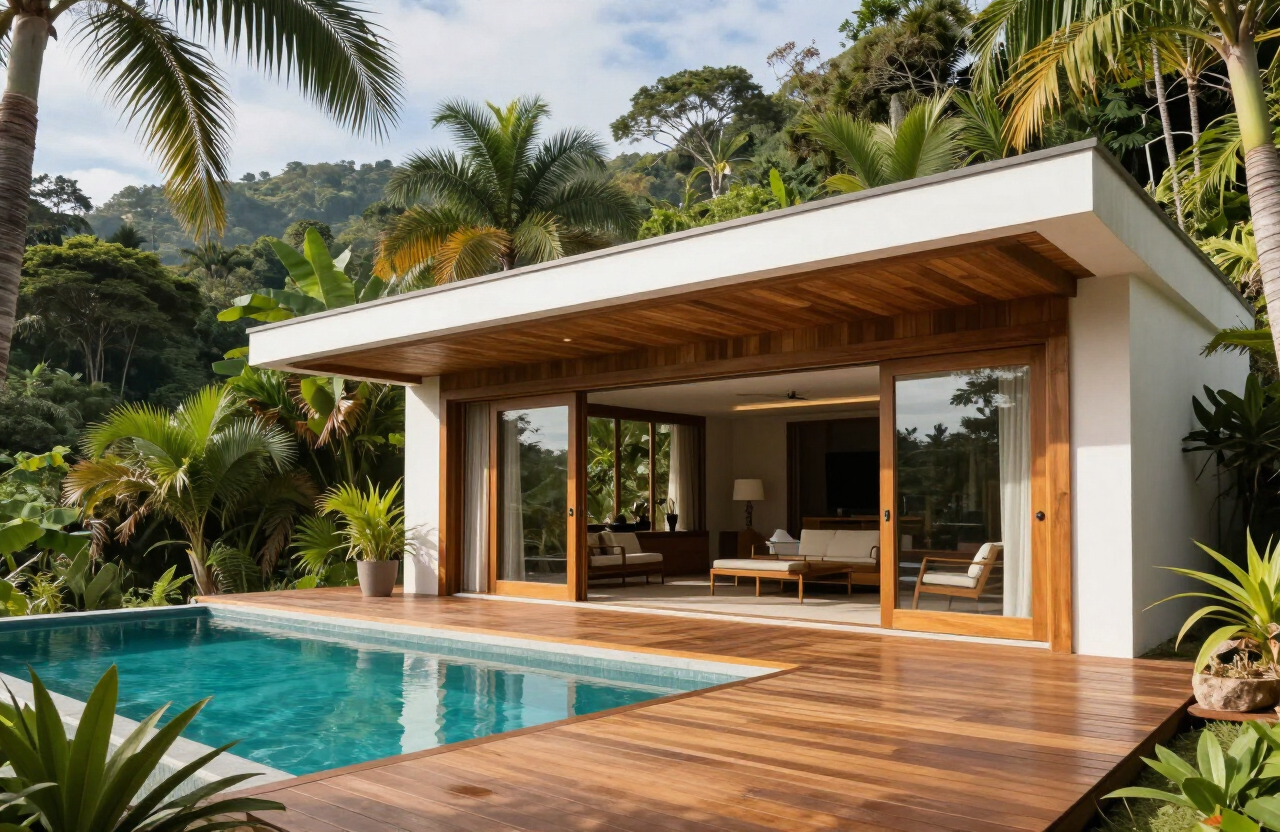
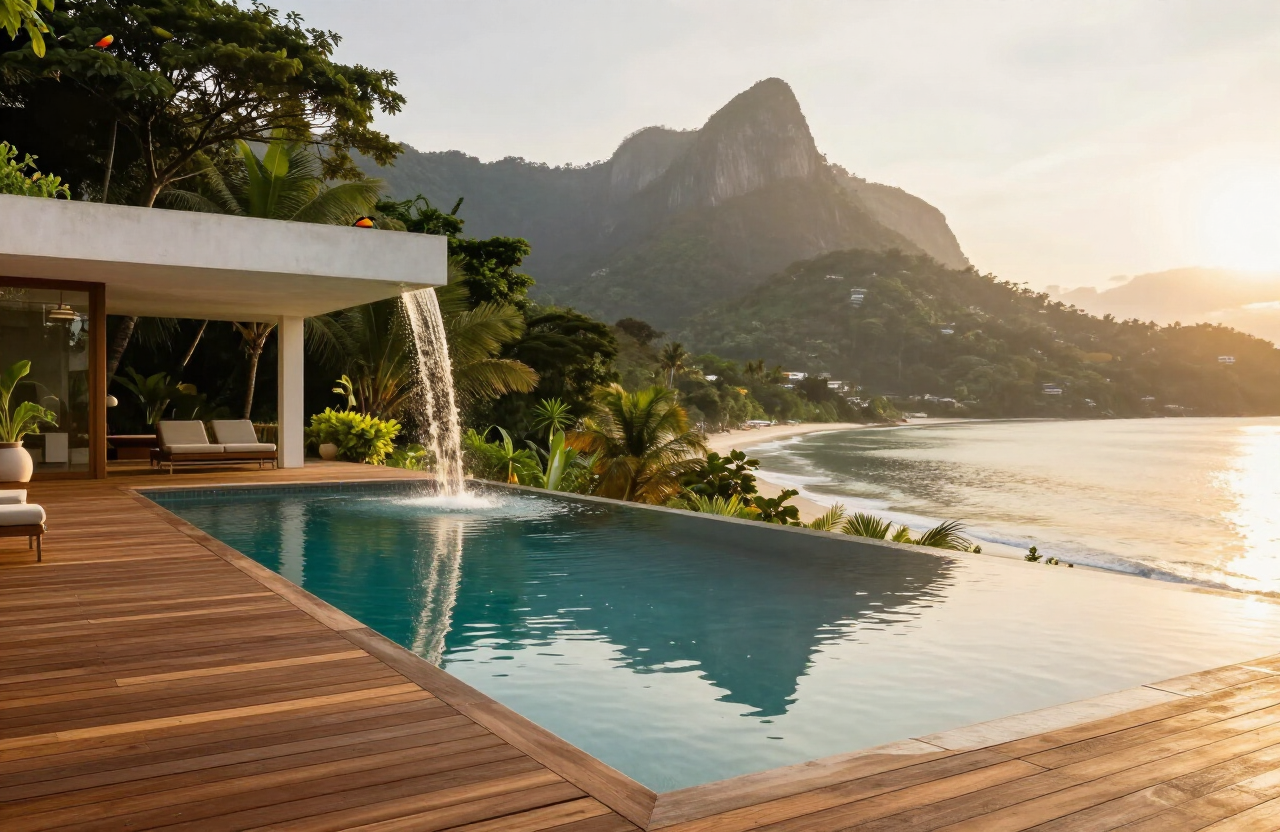
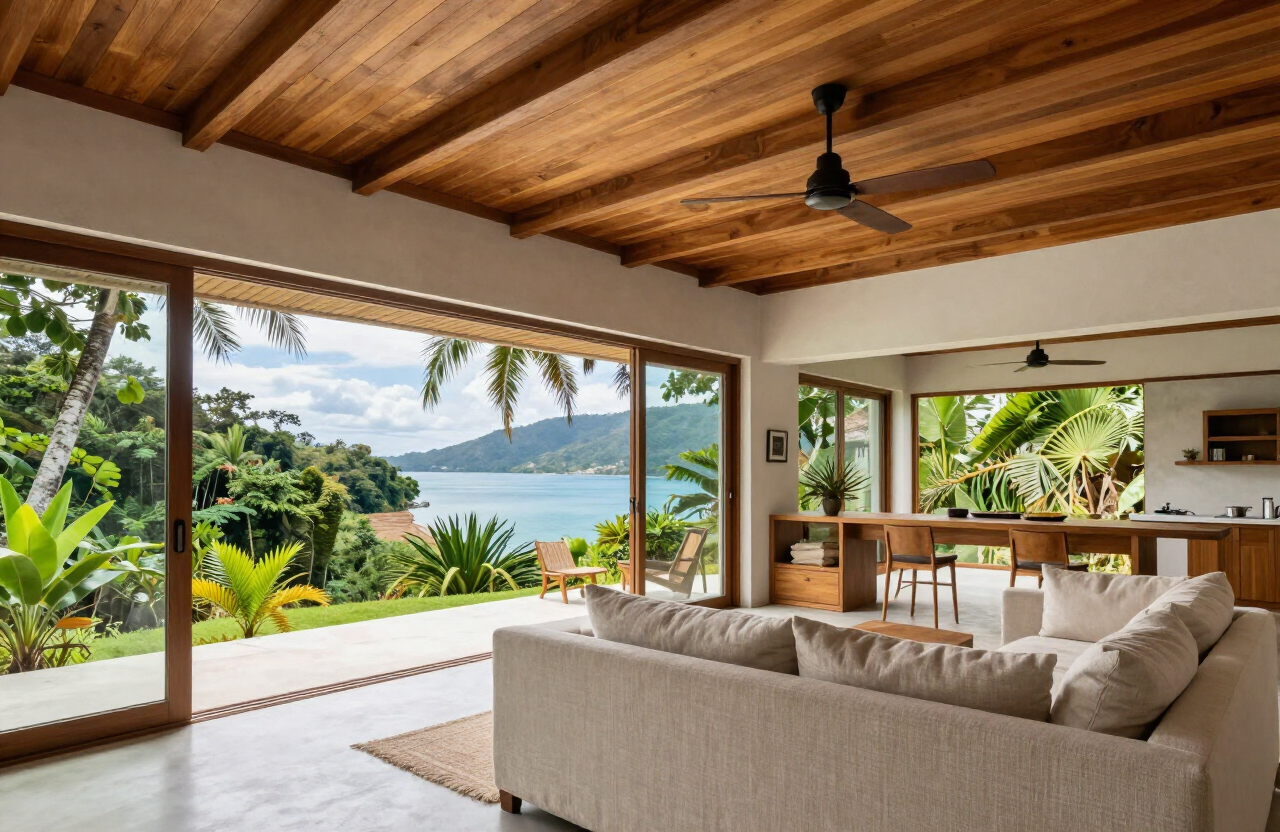
Paraty is a colonial town on the Costa Verde of Brazil, where the mountains of the Atlantic rainforest tumble straight into the sea. The Casa de Verão — the summer house — was built to dissolve into that green. A long, low pavilion of warm timber and white concrete opens through sliding glass walls onto a wooden deck and an infinity pool that appears to spill into the bay. There is almost no boundary between the living room and the forest.
The house was designed for the climate: deep eaves for shade, cross-ventilation for the humid summers, and materials that weather gracefully beside salt water. In the morning the pool reflects the mountains; in the afternoon toucans and parrots pass through the canopy above the deck. It is tropical modernism at its most generous — a house that does not conquer its setting but invites it in, and lets the rainforest do the talking.
- Style
- Tropical modernism
- Setting
- Atlantic rainforest & bay
- Materials
- Timber, white concrete
- Feature
- Infinity pool to the sea
- Estimated value
- ~$4M
Villa del Balbianello
Lake Como, Italy
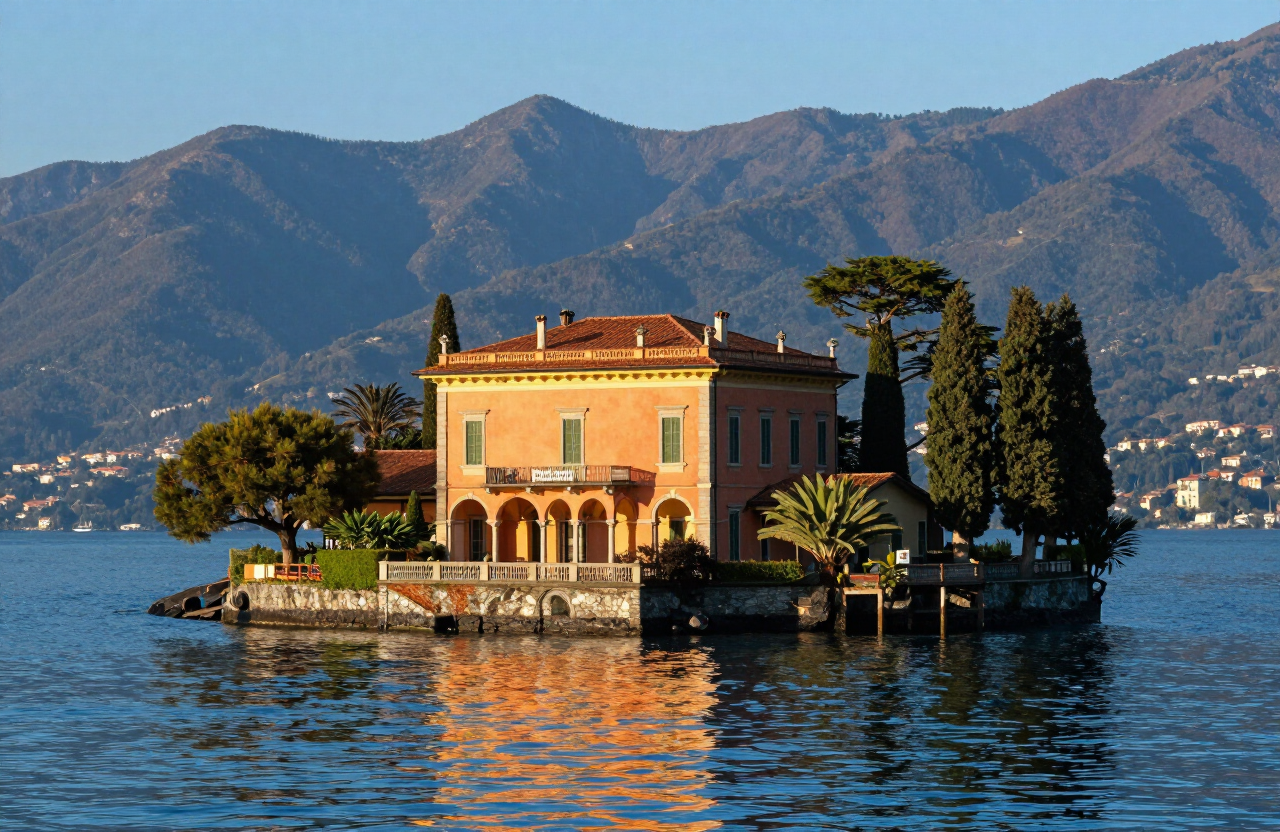
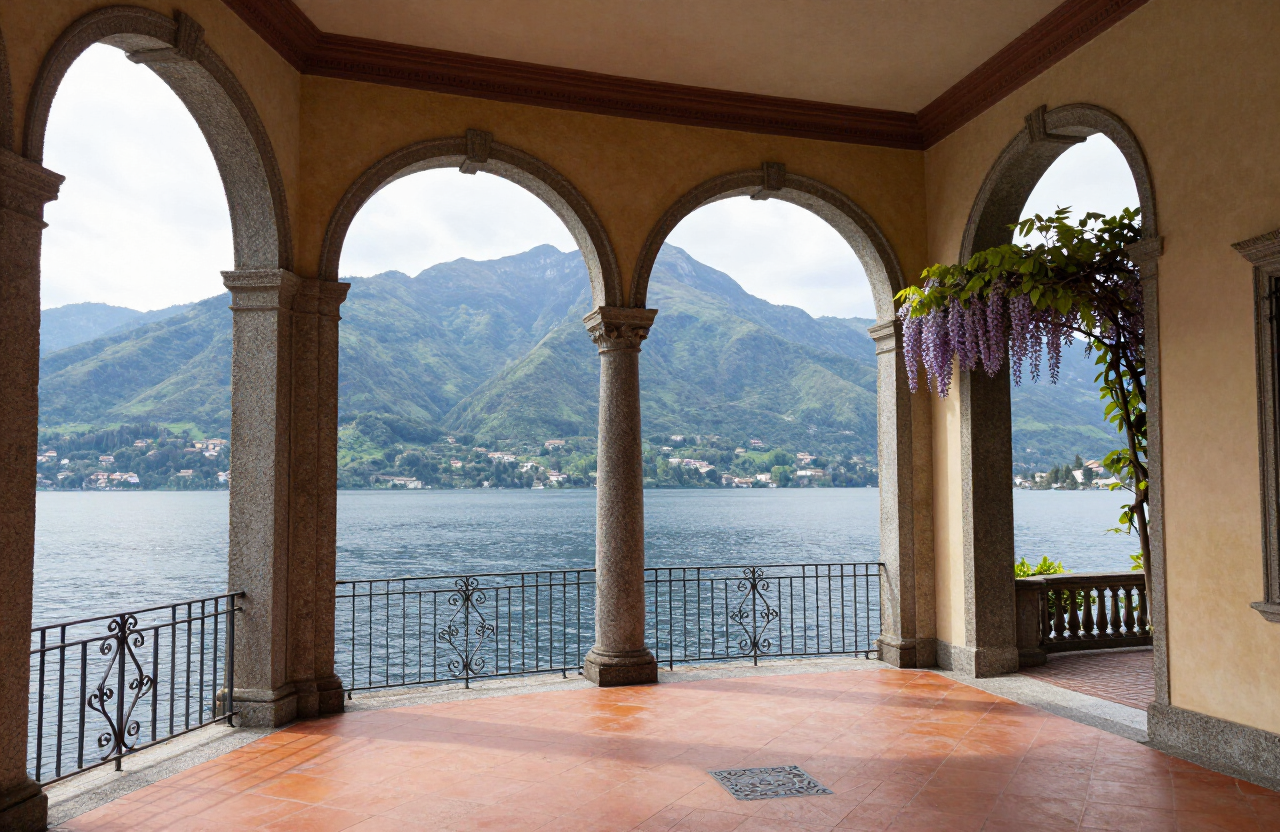
On the western shore of Lake Como, the wooded promontory of Lenno dips into the water like a finger pointing toward the Alps, and at its tip sits Villa del Balbianello — a vision of terracotta and cream that seems to float between the green mountains and the blue lake. Built in 1787 on the foundations of a Franciscan monastery, the villa rises in loggias of slender arches that open on every side to the water, so that from the terrace the lake appears to pour into the house itself.
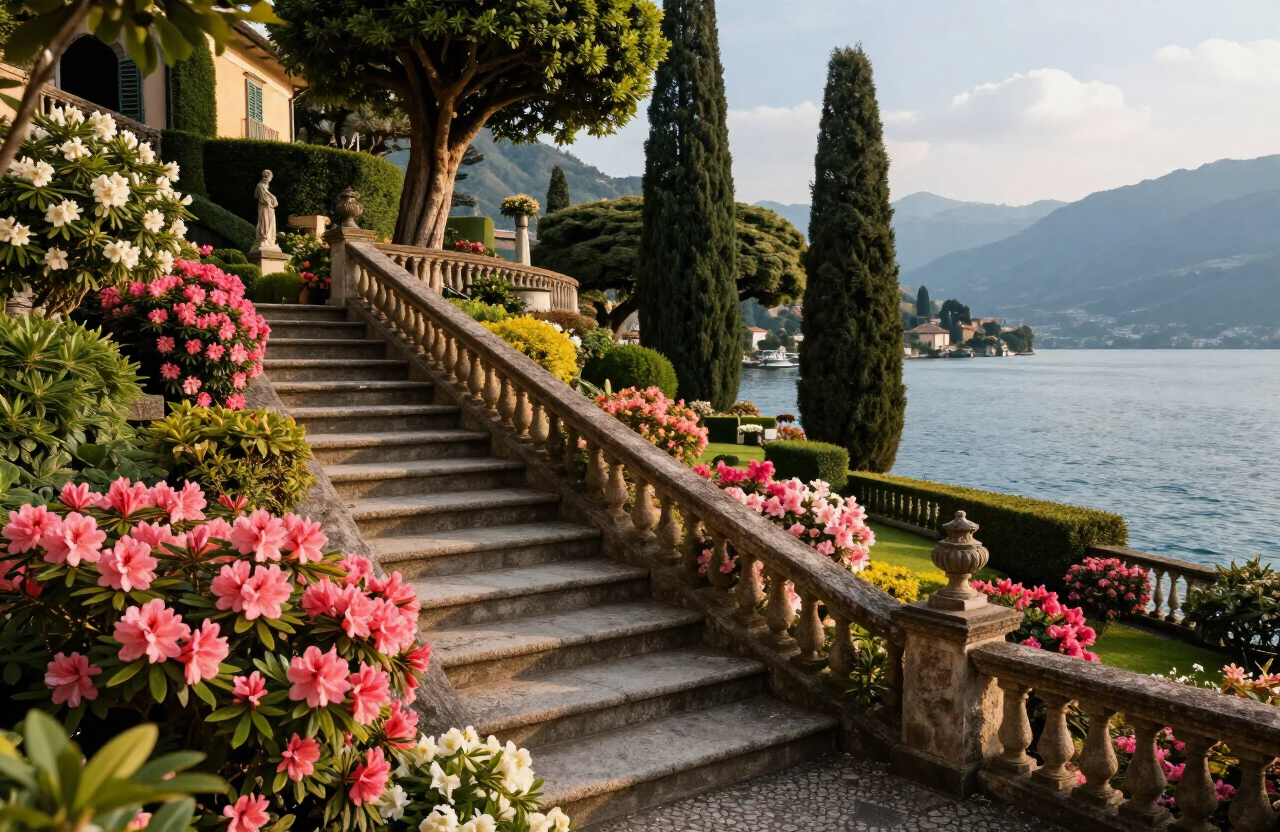
The approach is by boat, across water so still that the villa and its cypresses are doubled in a perfect reflection — a mirror image as precise and dreamlike as the Taj Lake Palace an ocean away. Behind the house, terraced Italian gardens climb the hillside in flights of stone steps bordered by azaleas, rhododendrons and statues, each landing revealing a new vista of the lake. Now cared for by Italy’s FAI heritage trust, the villa has lost none of its 18th-century romance — and gained a cinematic afterlife as the setting of a James Bond film. It is a house that turns a lake into a painting, and a visit into a memory you keep for life.
- Built
- 1787
- Style
- Lakeside Renaissance villa
- Setting
- Promontory on Lake Como
- Access
- Boat or footpath
- Estimated value
- Priceless (FAI heritage)
Farnsworth House
Plano, Illinois, USA
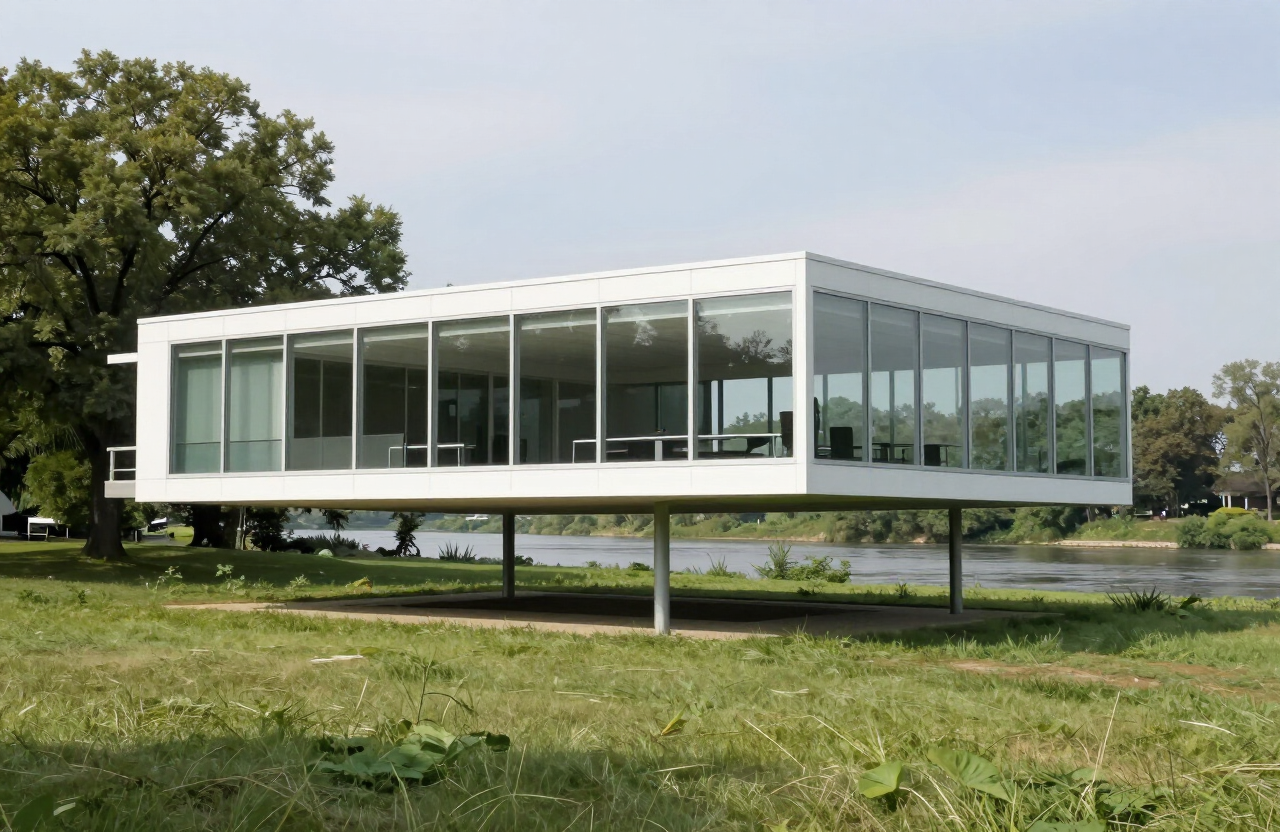
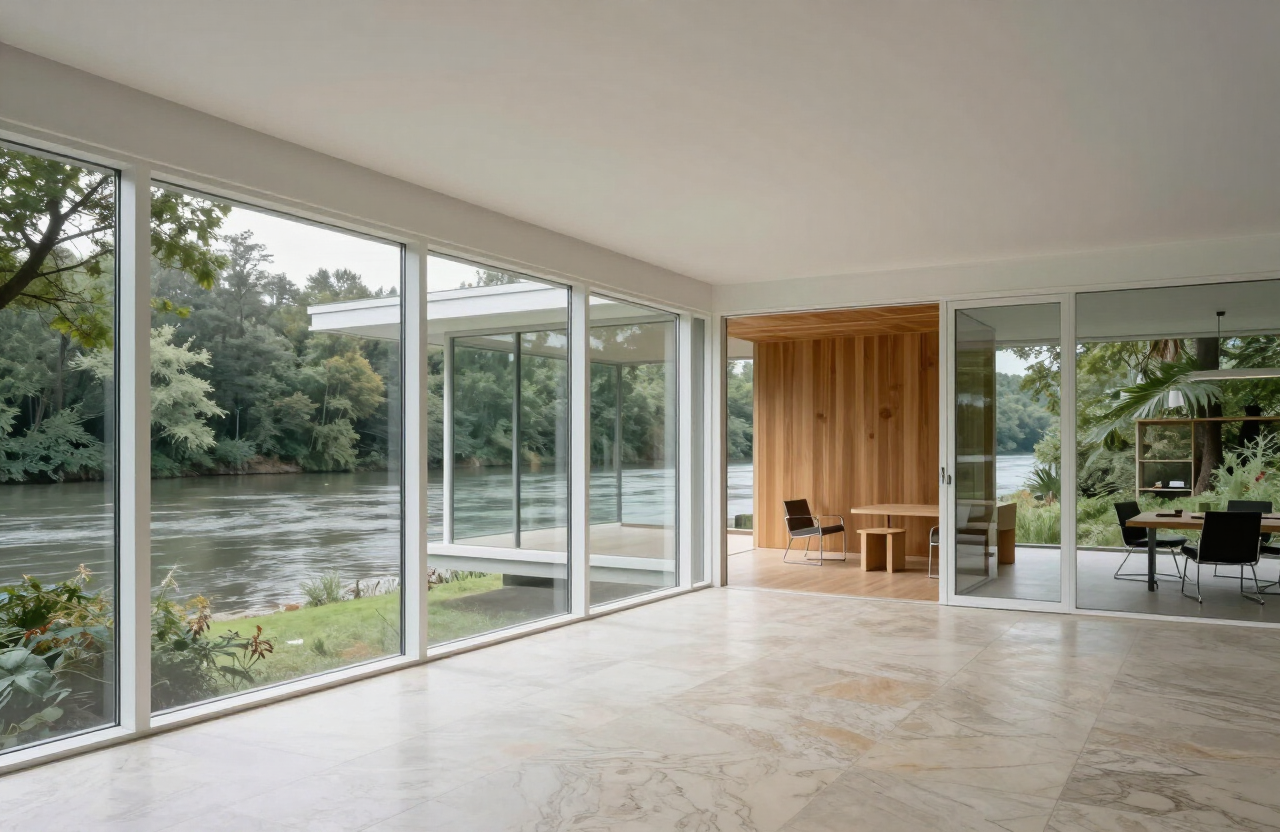
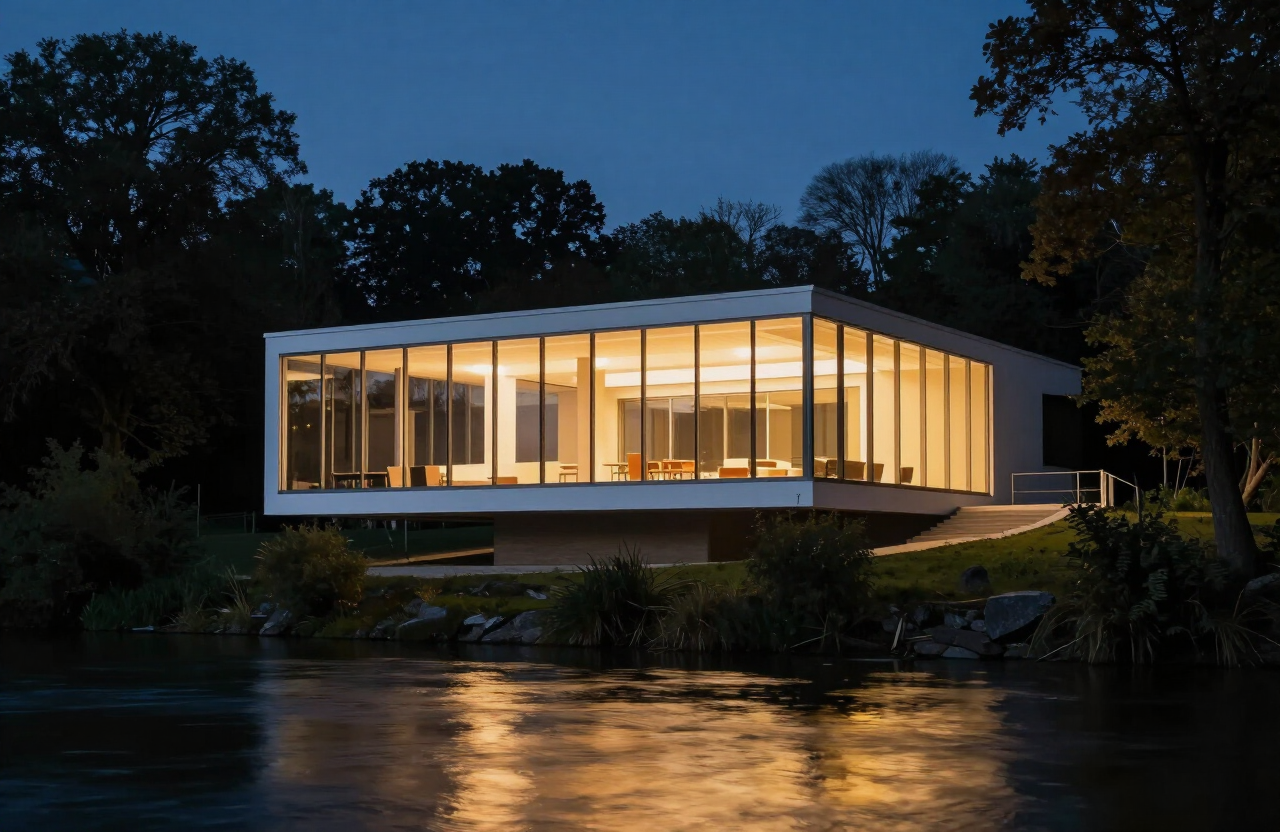
On a meadow beside the Fox River, Ludwig Mies van der Rohe distilled the modern house to its purest possible form: a single white steel-and-glass box, lifted five feet on slender pilotis so that the prairie grass flows uninterrupted beneath it. Completed in 1951 for the Chicago doctor Edith Farnsworth, the Farnsworth House is one room — no partitions, no clutter, only travertine floors, a white steel frame, and four walls of glass through which the surrounding forest changes colour with the seasons.
By day the glass reflects the trees and the sky until the house nearly disappears; at night it becomes a lantern glowing among the dark trunks. Mies called it “almost nothing,” and that was the highest compliment he could pay a building. The river, characteristically, has its own opinions and floods the house every few years — a reminder that even the most refined modernism must negotiate with nature. A UNESCO World Heritage Site as part of the 20th-century works of Mies van der Rohe, the Farnsworth House remains the most serene glass dwelling ever built: a temple to light, proportion, and the view.
- Architect
- Mies van der Rohe
- Completed
- 1951
- Style
- International Style
- UNESCO
- World Heritage, 2018
- Estimated value
- ~$25M (museum)
Villa Tugendhat
Brno, Czech Republic

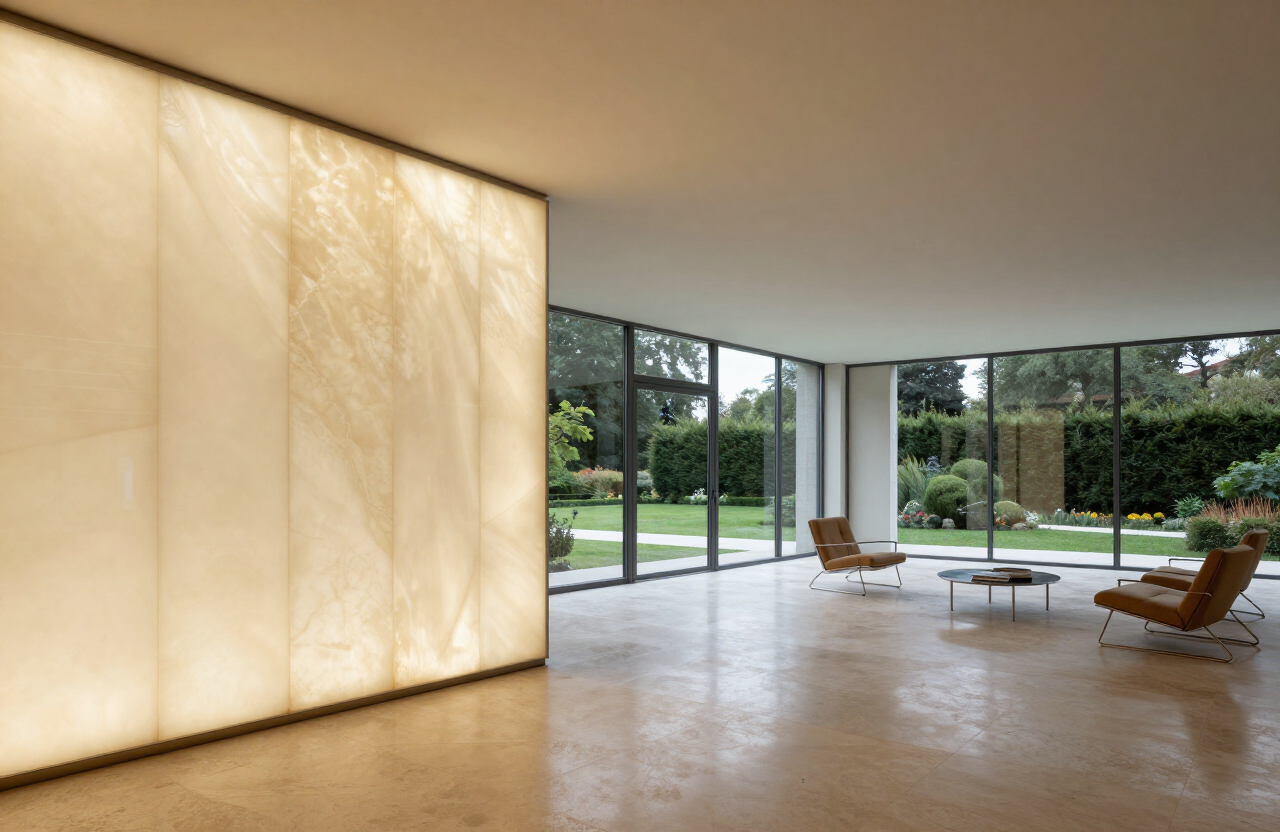
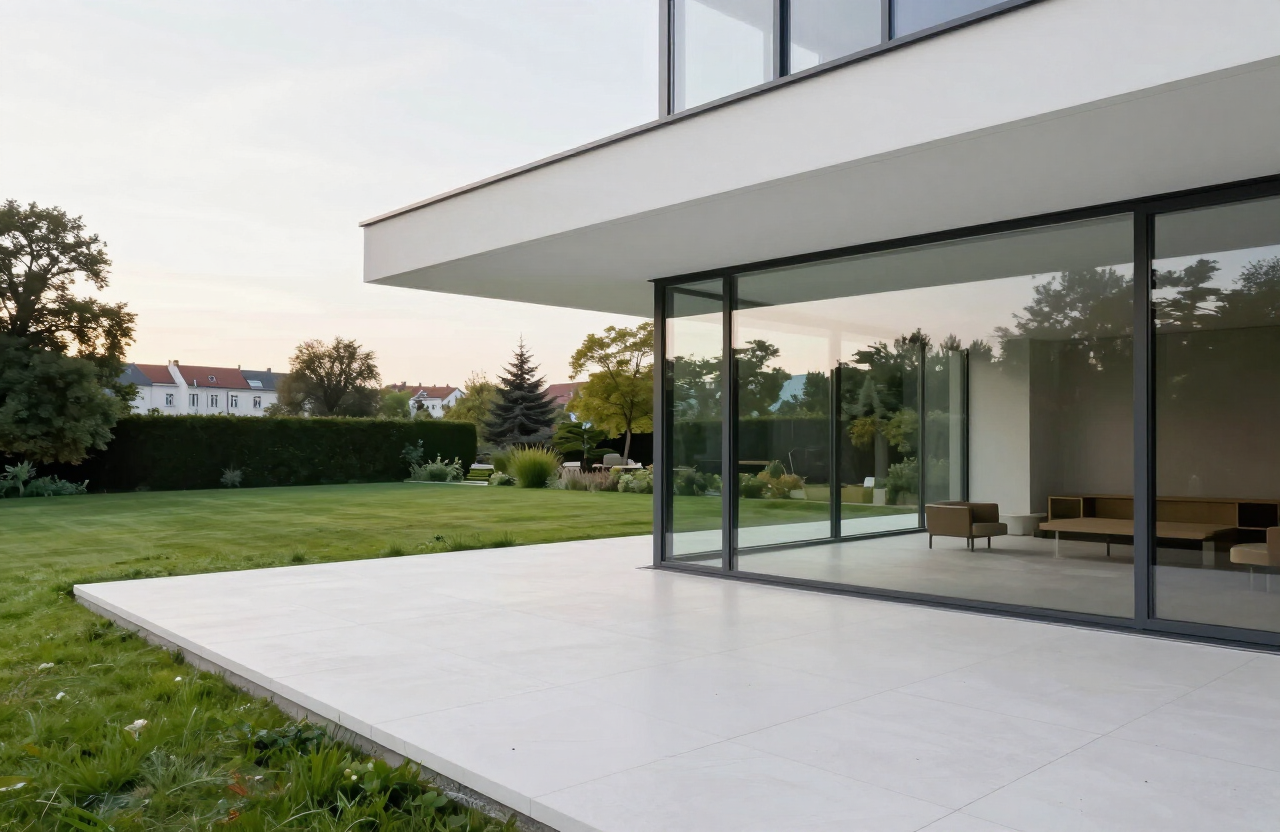
Perched on a slope above the Czech city of Brno, Villa Tugendhat is the house where Mies van der Rohe invented the modern luxury home. Completed in 1930 for the wealthy Tugendhat family, its main living floor is a single flowing space defined not by walls but by materials: a free-standing wall of semi-translucent onyx that glows like honey when the sun strikes it, a curved screen of Makassar ebony, and travertine floors that run straight out through full-height retractable glass onto the garden terrace.
The technical ambition was astonishing for 1930 — the glass walls lowered electrically into the floor to erase the boundary between inside and out, and the air was filtered and cooled by a mechanical system decades ahead of its time. The cost was so vast that the family could have built a small apartment block for the same money, yet the result — a UNESCO World Heritage Site since 2001 — is regarded as one of the finest modernist houses ever made. Restored to its original perfection and reopened as a museum, Villa Tugendhat is a house that proved modernism could be not only rigorous but deeply, quietly opulent.
- Architect
- Mies van der Rohe
- Completed
- 1930
- Style
- International Style
- UNESCO
- World Heritage, 2001
- Estimated value
- ~$40M (museum)
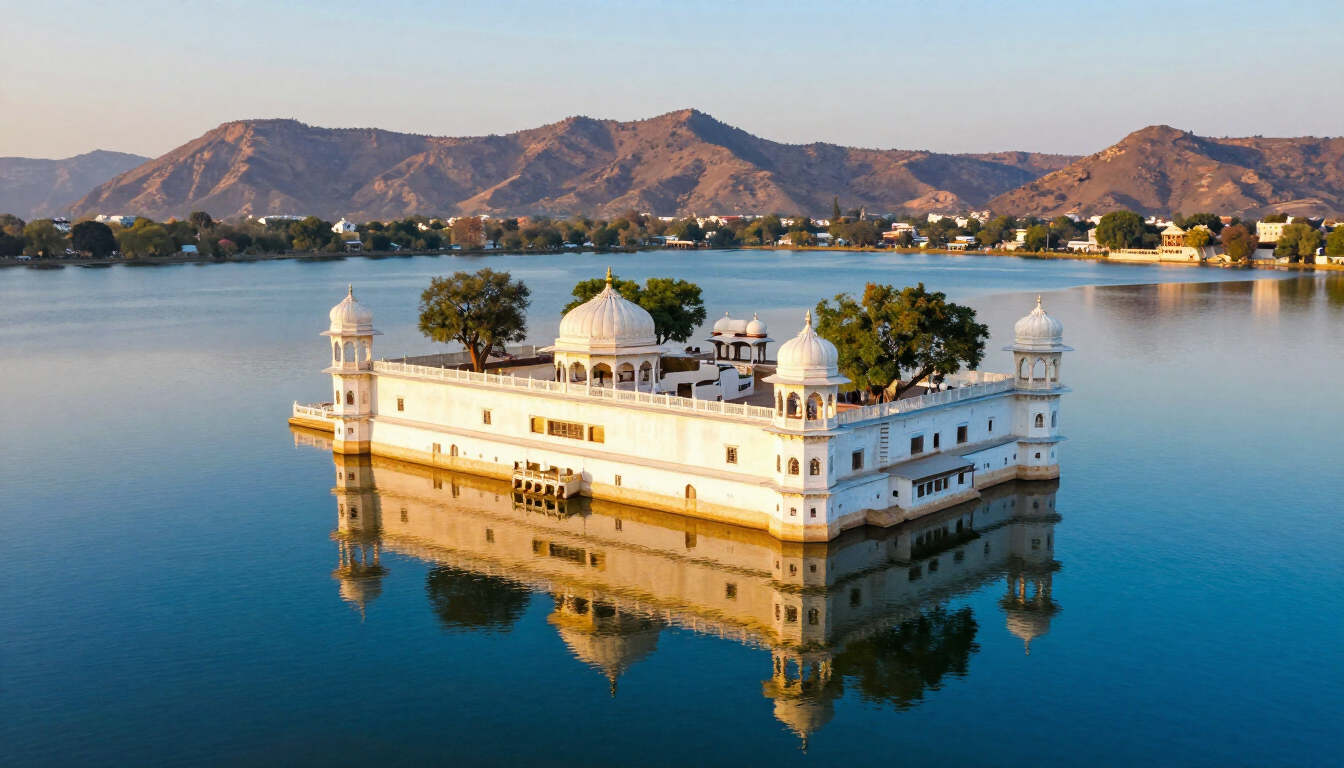
Taj Lake Palace
Udaipur, India
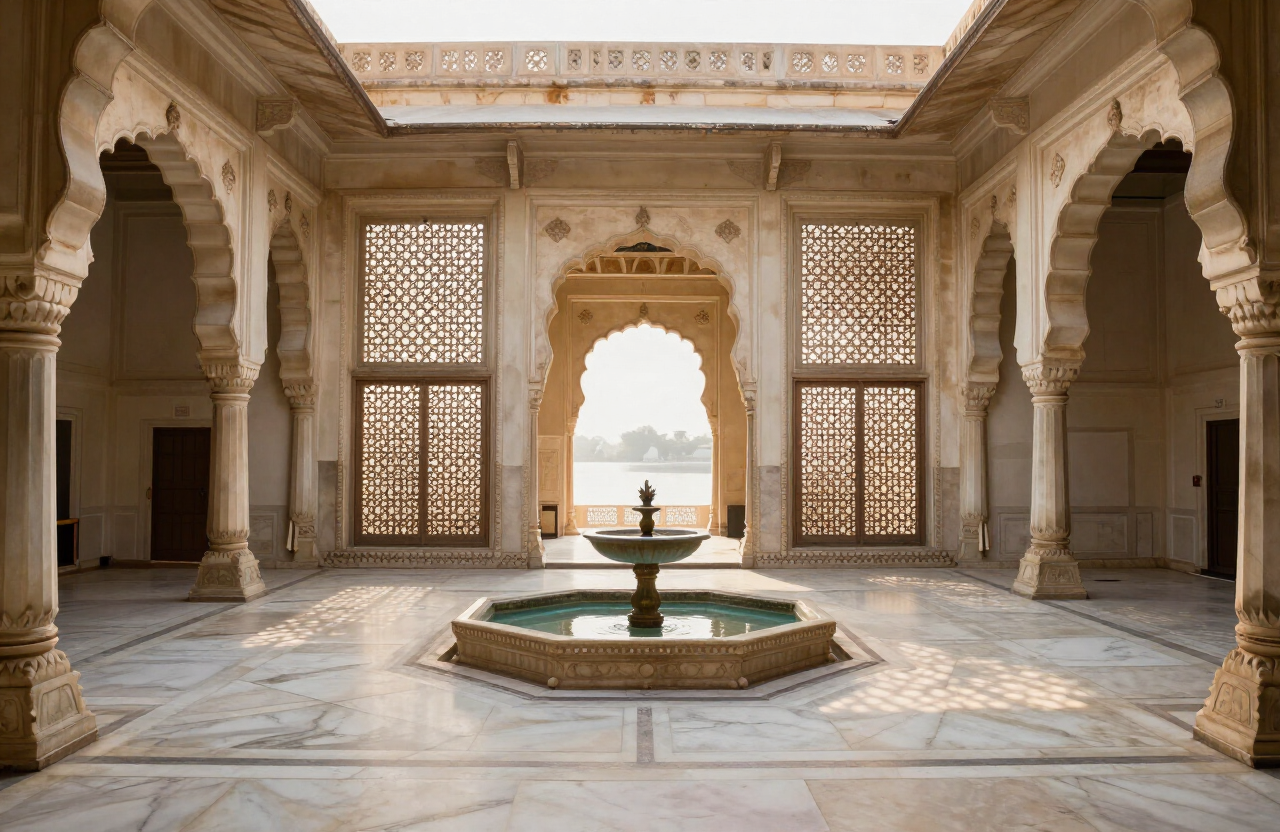
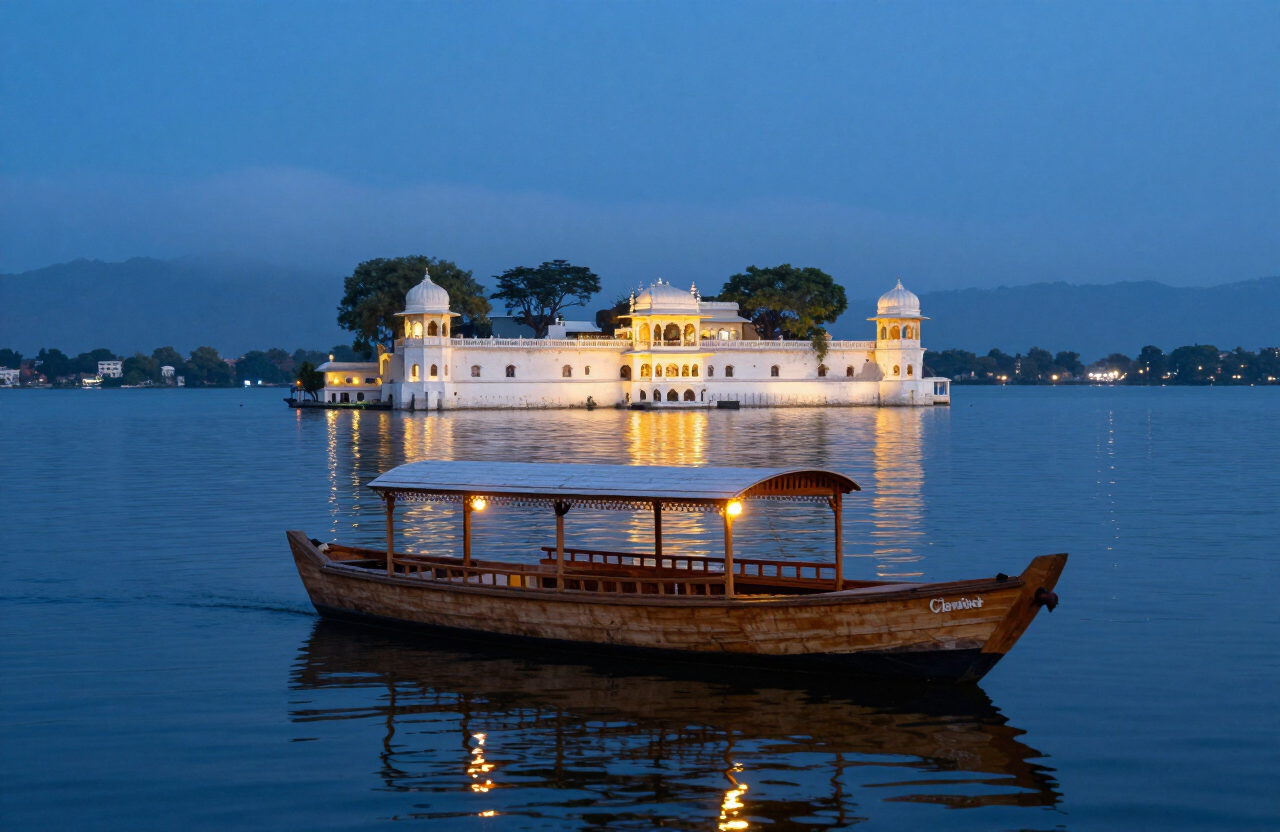
Floating on the still waters of Lake Pichola, the Taj Lake Palace is a vision of white marble that seems to have drifted out of a dream. Begun in 1746 as the royal pleasure palace of the Maharana of Mewar, it covers an entire island in a cascade of domes, courtyards and latticed balconies, mirrored perfectly in the lake so that the building and its reflection form a single perfect symmetry. At dawn, when mist rises off the water and the Aravalli hills glow behind it, it is the most romantic building in India.
Reached only by boat, the palace was designed for the monsoon — its chhatri pavilions catch the breeze, its jali screens filter the light into patterns, and its inner courtyard opens to the sky to gather the season’s first rain. Now a hotel, it has lost none of its royal serenity: guests arrive by private launch to corridors of inlaid marble and rooms that look straight out onto the water. It is a house that turns a lake into a throne room — the most magical dwelling on this list.
- Built
- 1746
- Style
- Rajput royal palace
- Setting
- Island on Lake Pichola
- Access
- Private boat only
- Estimated value
- Priceless (heritage hotel)
Fallingwater
Mill Run, Pennsylvania, USA
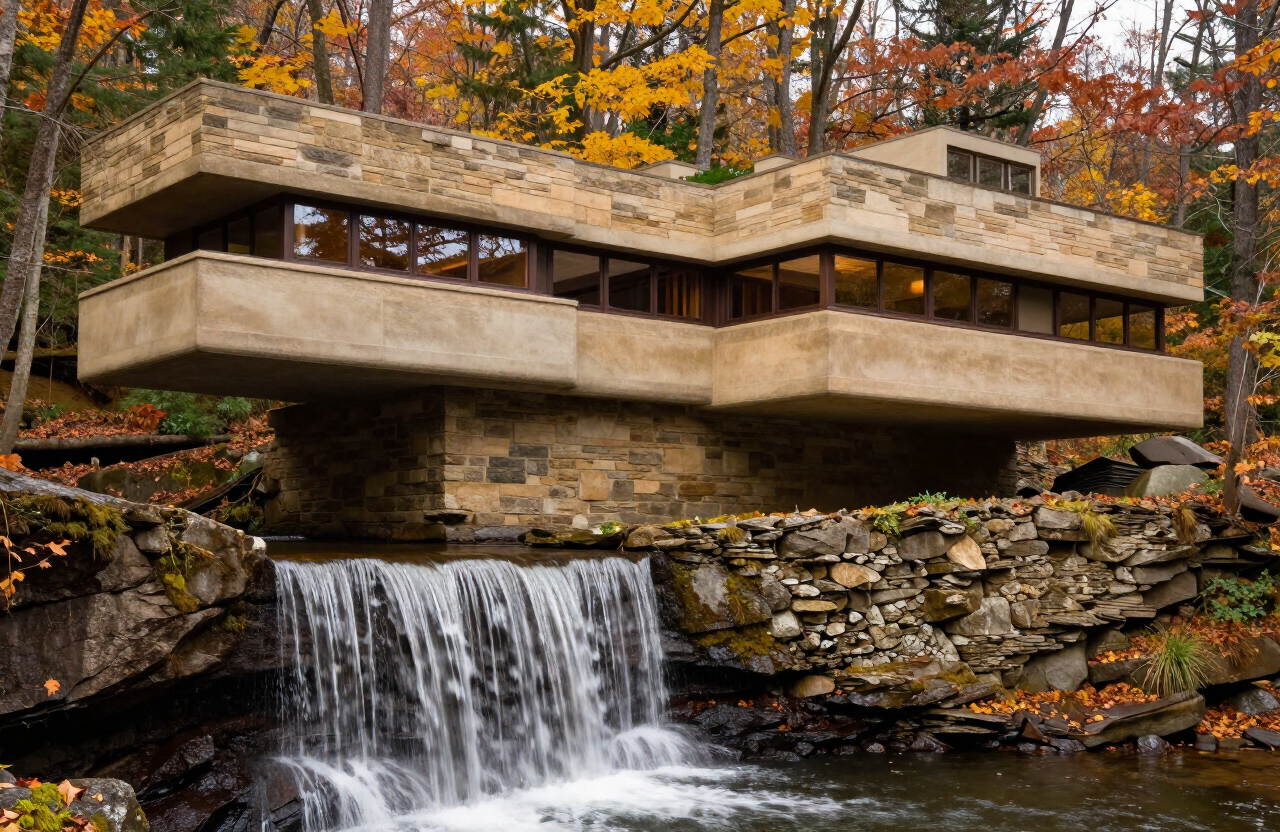
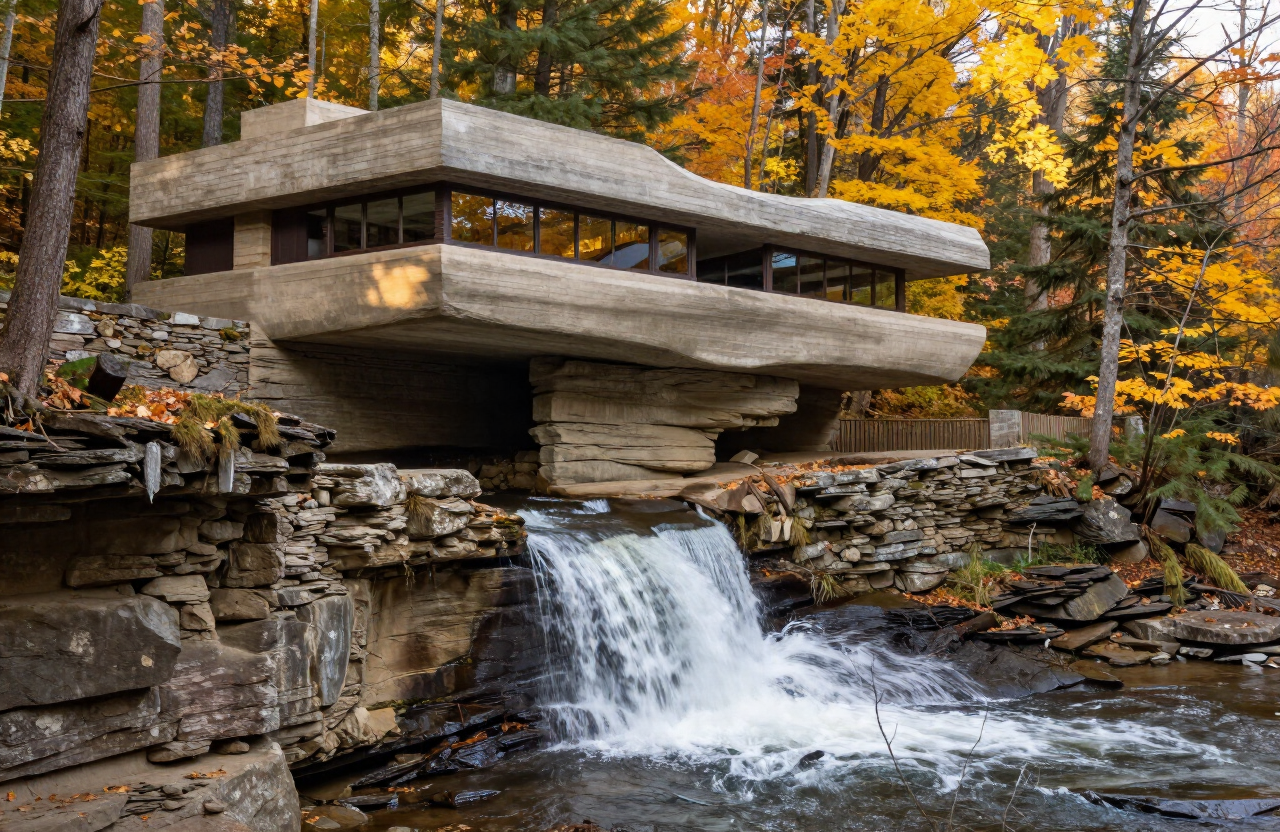
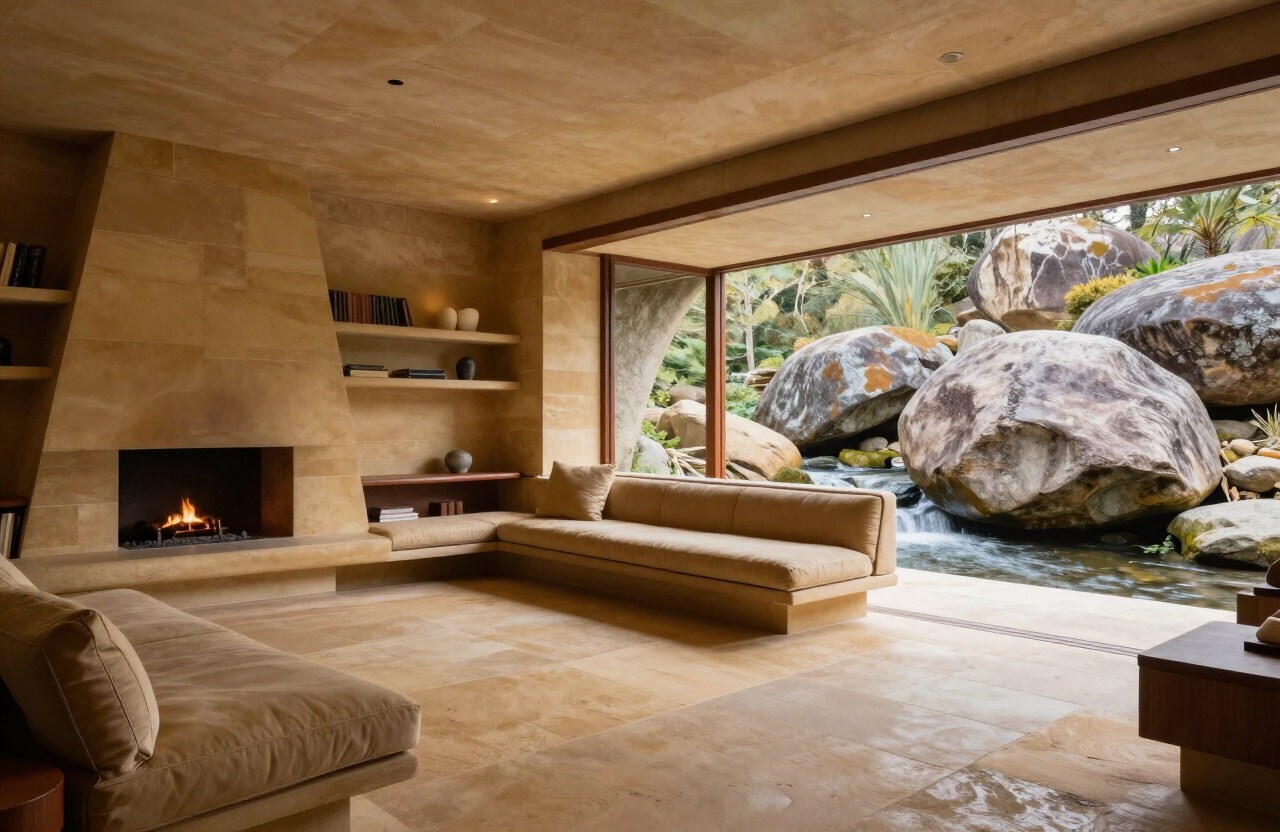
In the forests of southwestern Pennsylvania, Frank Lloyd Wright did the impossible: he built a house over a waterfall, so that the water runs beneath the living room and the sound of it is the sound of the house. Completed in 1939 for the Kaufmann family, Fallingwater is a stack of cantilevered concrete terraces anchored to a sandstone bluff, each one reaching out over the stream like a series of slow, horizontal leaps above the rushing water below.
Wright wanted the house to feel not as though it sat on the landscape but as though it grew from it — the same warm local stone forms the walls and the floors, and the chimneys rise out of the boulders themselves. Step inside and the ceilings press low to lead your eye out to the terraces and the forest; the corners of the living room open entirely so the stream becomes part of the room. Fallingwater is the most famous modern house in the world, and the most beloved — proof that architecture, at its best, can make a home feel like part of nature itself.
- Architect
- Frank Lloyd Wright
- Completed
- 1939
- Style
- Organic architecture
- UNESCO
- World Heritage, 2019
- Estimated value
- ~$35M (museum)
Enjoyed this ranking?
Get the next one first
One carefully argued Top 10 per week, straight to your inbox. No noise.
Keep reading
Related rankings
 Travel
March 2, 2026 · 11 min read
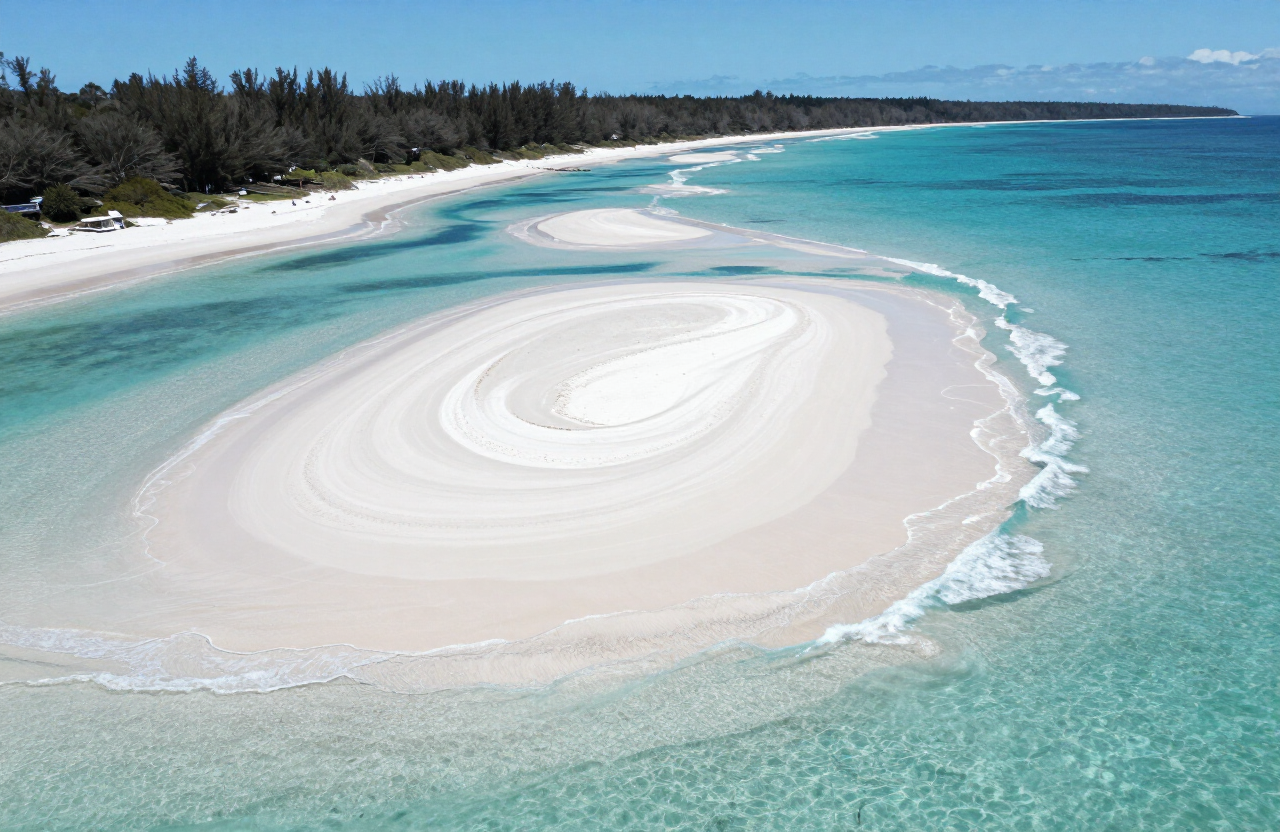
The 10 Best Beaches in the World
White silica whirlpools in Australia, pink sand in the Bahamas, a shipwreck in a Greek cove — ten stretches of shoreline that justify every mile of the journey.
Read the ranking Cars
February 18, 2026 · 13 min read
The 10 Fastest Cars in the World
From Koenigsegg’s 330-mph claim to the Veyron that started the modern speed war — the ten fastest production machines ever to wear number plates.
Read the ranking